

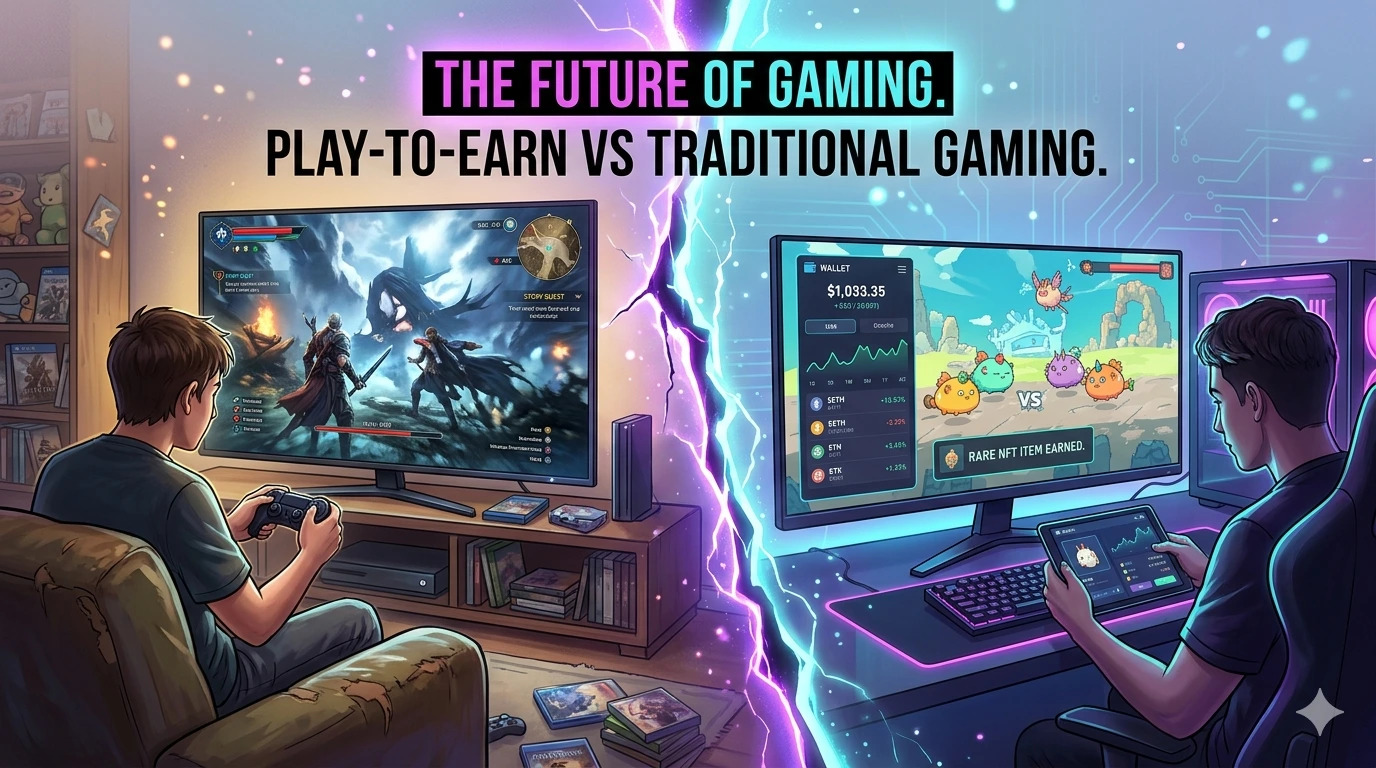
Gaming is changing fast. Today, players are comparing Play-to-Earn gaming with traditional gaming to see which model offers more value, ownership, and long-term growth.
What Is Traditional Gaming?
Traditional gaming focuses mainly on entertainment. Players spend money on games and in-game items, but all assets remain controlled by the developers. While the experience can be fun, there is no real ownership or financial return for players.
What Is Play-to-Earn Gaming?
Play-to-Earn gaming allows players to earn rewards through gameplay. Using blockchain technology, players can own digital assets and benefit from their skills and time. This model connects gameplay with real value.
Key Difference Between Play-to-Earn and Traditional Gaming
The biggest difference is ownership.
Traditional gaming keeps control centralized, while Play-to-Earn gaming gives players asset ownership and participation in the game economy.
Why Play-to-Earn Is Gaining Attention
Play-to-Earn gaming is growing because it rewards skills, supports transparency, and encourages community involvement. Many modern Web3 games now focus on quality gameplay along with sustainable earning systems.
A Real Example of Play-to-Earn Gaming
Projects like Grand Gangsta City show how Play-to-Earn gaming is evolving. By combining competitive gameplay with blockchain ownership, players can enjoy action-driven experiences while being part of a growing ecosystem.
🌐 Official Website: https://grandgangstacity.com/
🐦 Twitter (X): https://x.com/grandgangstaci
Final Thoughts
Traditional gaming will always exist, but Play-to-Earn gaming is shaping the future by giving players more control and value. As technology improves, this model is expected to grow alongside mainstream gaming.